A missing tooth does not always lead straight to implant placement. You will need an examination, suitable scans, decisions about extraction or bone grafting, a healing period and several restoration appointments before the treatment is complete. By the end, you will know what happens at each stage, which choices affect timing, and what to ask at a missing tooth implant appointment.
Key takeaways
- Bring your medication list and dental history to the first implant consultation.
- A clinical examination and imaging determine whether an implant suits your mouth.
- Healing time separates implant placement from abutment and crown fitting.
- Clean implants daily and attend scheduled reviews to protect surrounding bone and gums.
What happens at the first dental implant consultation?
The first appointment establishes whether an implant is suitable and what information is needed before treatment begins. During a dental implant consultation in Kammanahalli, the dentist asks about your dental history, the date and cause of tooth loss, pain, bleeding, previous treatment, smoking, diabetes, immune conditions, and medicines such as blood thinners or steroids.
Tell them about allergies, reactions to anaesthesia, and difficulty attending appointments.
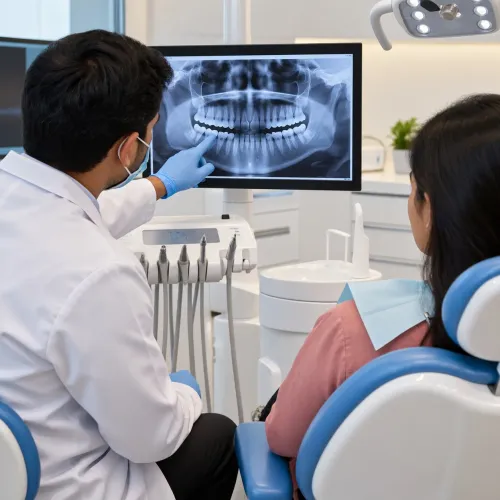
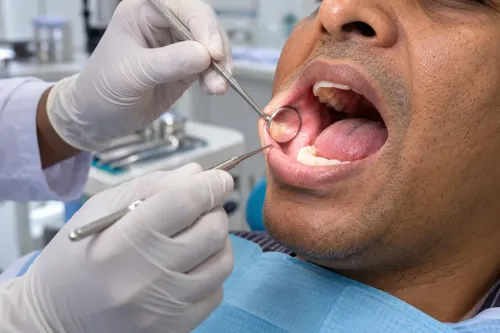
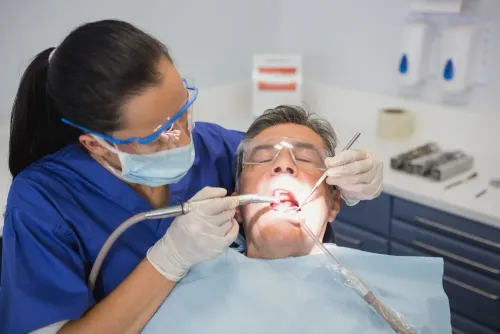
The examination covers the proposed implant site, gums, remaining teeth, jaw opening, bite, crown space, plaque control, active decay and gum disease. Bring recent dental X-rays, a medicine list, medical reports and details of previous dental work. The clinic may also take photographs, periodontal measurements and a conventional dental X-ray.
| Record | What it shows | When it is used |
|---|---|---|
| Dental X-ray | Tooth roots, nearby bone and obvious pathology | Initial planning when the image answers the clinical question |
| CBCT scan | Three-dimensional bone width and height, mandibular canal, nasal cavity or maxillary sinus | When conventional X-rays do not provide enough information; it is not automatic for every patient |
A missing tooth implant appointment may end with planning rather than placement. Ask:
- Could another tooth be saved?
- Which records are still needed?
- How long will each stage take?
- Is the restoration a crown, bridge or denture?
How do you know whether an implant is the right choice?
An implant is the right choice only when your bone, bite, gum health and ability to maintain the restoration support predictable treatment. The dentist combines the examination and X-rays or CBCT scan with your medical history and daily-care capacity before recommending it.
The proposed site needs enough bone volume, space for the crown and a bite that will not overload the implant. Active gum disease must be controlled because plaque and inflammation can destroy the tissues supporting an implant. Heavy smoking, poor oral hygiene, uncontrolled diabetes or another uncontrolled condition can delay healing or increase failure risk.
You also need to clean around the restoration every day and attend review appointments. Ask whether inadequate bone would require socket preservation, guided bone regeneration or a sinus lift, then weigh the extra surgery and healing time.
A failing tooth is not automatically a tooth for extraction. Compare the choices across the whole treatment, not just the visible crown:
| Option | What it involves | Main trade-off |
|---|---|---|
| Save the tooth | Root canal treatment and a suitable crown | Preserves natural tooth structure when the root is predictably treatable |
| Implant replacement | Extraction, possible grafting, implant, abutment and crown | Requires surgery, healing and long-term maintenance |
| Other replacement | Bridge or removable denture | May involve neighbouring teeth or reduced stability |
During a dental implant consultation in Kammanahalli, ask why each option fits your findings. Atlas Dental Clinic is one place to ask these questions, while the dental implant treatment process in Kammanahalli should follow clinical evidence, not location alone.
Related services
Dental Implants At Atlas Dental Clinic, Kammanahalli, Bangalore, we offer advanced dental implant treatment to permanently replace missing teeth with strong,... View service → |
Root Canal Treatment At Atlas Dental Clinic, Kammanahalli, Bangalore, we provide advanced root canal treatment to save infected or severely decayed teeth and relieve pain... View service → |
What happens during extraction, grafting and implant placement?
Extraction comes after active decay or gum disease is controlled, and only when the tooth cannot be restored. The implant treatment steps then depend on infection, remaining bone, bite and the stability the planned restoration requires.
1. During extraction, the dentist assesses whether the socket is suitable for immediate placement. An implant can be inserted at the same appointment when infection is controlled, enough bone remains for primary stability and the planned position supports the crown. If not, the tooth is removed and the socket heals before placement.
2. A socket-preservation graft can limit bone shrinkage after extraction. If the healed site still lacks foundation, guided bone regeneration or a sinus lift can rebuild it. These procedures can require separate surgery and add several healing months.
3. Implant placement is usually performed with local anaesthetic. Sedation can help with anxiety, but it is not general anaesthesia; it requires medical assessment, monitoring and a safe journey home. The fixture is positioned in bone and the gum is closed with sutures.
Immediate placement does not mean immediate loading. The implant may be placed on extraction day without a functional tooth being attached. Immediate loading requires sufficient stability and a carefully planned temporary restoration.
The dental implant procedure in Bangalore therefore varies between patients. The dental implant treatment process in Kammanahalli may include extraction, grafting, placement and separate healing stages rather than one appointment.
How do healing, abutment placement and crown fitting work?
Healing usually takes several months while bone bonds to the implant surface, a process called osseointegration. The actual interval depends on the site, bone quality, grafting and loading plan.
1. After placement, the implant remains unloaded or supports a planned temporary tooth. The temporary tooth can preserve appearance and chewing function, but excessive force can disturb an implant that is still healing. Immediate placement does not mean immediate loading.
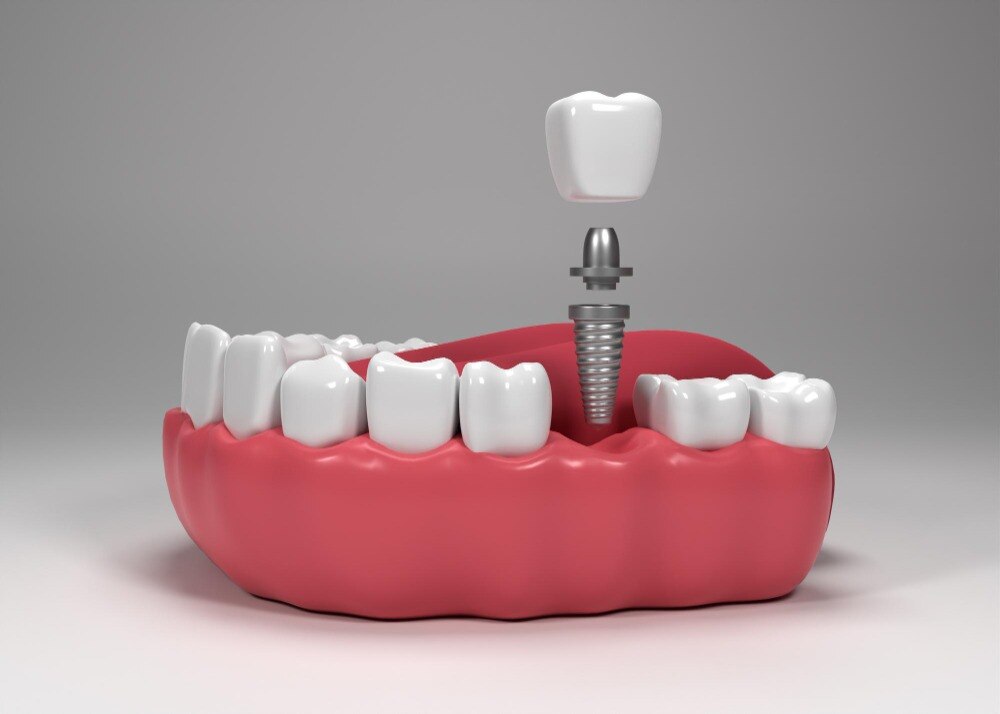
2. At a review, the dentist confirms stability before attaching the abutment. The abutment is the connector between the implant fixture in the bone and the visible restoration; it is not the fixture or the crown.
3. The dentist records the shape, colour, bite and neighbouring teeth through impressions or a digital scan. These records guide a final crown, bridge or denture that fits the available space and surrounding teeth.
4. At crown fitting, check that the restoration feels comfortable, does not affect speech or create a high bite, and can be cleaned around its margins. Ask for an adjustment if food repeatedly traps beside it or your bite feels uneven.
The dental implant treatment process in Kammanahalli can involve separate visits for extraction, grafting, placement, review, abutment connection, scanning, crown fitting and bite adjustment. Ask for a stage-by-stage timetable: these implant treatment steps are not necessarily a one-visit replacement.
What care and follow-up does an implant need after treatment?
After surgery, expect soreness, swelling, bruising and minor bleeding. Follow the clinic’s instructions for pain relief, brushing, diet and activity. Contact the treating clinic promptly for:
- Persistent numbness
- Uncontrolled bleeding
- Worsening swelling
- Fever
- Severe pain
Less common complications include infection, damage to nearby structures, nerve disturbance and failure of osseointegration. Do not wait for a scheduled review if these warning signs appear.
After the crown is fitted, clean around the restoration every day with a toothbrush and the method recommended for its shape, such as interdental brushes or floss designed for bridges. Plaque can cause peri-implant mucositis and, in some patients, peri-implantitis with progressive bone loss.
Keep periodic professional maintenance appointments. The dentist can inspect the gums, measure changes, check the bite, and examine the crown, abutment and neighbouring teeth. Smoking cessation matters because smoking impairs healing and is linked with poorer implant outcomes.
An implant does not protect adjacent teeth from decay or gum disease. The restoration can also loosen, fracture or wear. Follow-up confirms whether a temporary tooth is ready to be replaced with the definitive restoration.
A successful missing tooth implant appointment begins a maintenance commitment, not the end of dental care; a dental implant procedure in Bangalore is not a one-visit permanent fix.
Frequently asked questions
What happens at the first dental implant consultation?
The dentist reviews your dental and medical history, examines your mouth, discusses tooth loss and symptoms, and orders imaging when needed.
How do you know whether an implant is the right choice?
The decision depends on your bone volume, gum health, general health, medicines, smoking status, bite, and the condition of nearby teeth.
What happens during extraction, grafting and implant placement?
The dentist removes a damaged tooth when necessary, adds bone graft material if there is insufficient bone, and places the implant into the jaw.
How do healing, abutment placement and crown fitting work?
After the implant bonds with the jawbone, the dentist attaches an abutment, records the required measurements, and fits a custom crown.
What care and follow-up does an implant need after treatment?
Brush twice daily, clean around the implant as instructed, avoid damaging habits, report warning symptoms, and attend follow-up examinations.
Keywords