Full mouth rehabilitation is a coordinated treatment plan for widespread dental problems, not a fixed package or a single procedure. You will be able to identify the stages, treatments and records involved, understand why the sequence differs between patients, and compare a Bangalore treatment estimate more intelligently.
Key takeaways
- Expect a customised plan, not a fixed package covering every tooth.
- Treat gum disease, infection, bone loss and bite problems before restoration.
- Ask for each procedure, appointment stage, material and fee in writing.
- Compare total cost, maintenance needs and alternatives—not just the initial quote.
What Full Mouth Rehabilitation Means—and When It Is Needed
Full mouth rehabilitation is a coordinated plan to restore function, comfort, appearance and stability across many teeth—not a single procedure or fixed package. It may involve selected teeth rather than every tooth, combining fillings, root canal treatment, gum care, crowns, bridges, implants, dentures, orthodontics or bite adjustment according to what your mouth needs.
The search phrase “full mouth rehabilitation in bangalore what does it include” can be misleading if it suggests a standard treatment bundle. The plan depends on whether teeth are savable, how healthy the gums and supporting bone are, whether the bite is unstable, and what caused decay, fractures or wear.
Bruxism, erosion, abrasion and reflux must be addressed before rebuilding worn teeth, or restorations can fail again.
It differs from these more limited choices:
- Treating one tooth addresses one local problem, such as a cavity, fracture or infected nerve. Full mouth rehabilitation coordinates treatment across several areas so one restoration does not create a bite problem elsewhere.
- A smile makeover focuses mainly on visible colour, shape and alignment. Full mouth rehabilitation also addresses chewing, tooth strength, gum health, missing teeth and bite stability.
- Complete dentures replace all teeth in an arch after extraction. Full mouth rehabilitation aims to preserve restorable teeth and can use fixed or removable replacements only where needed.
- Crowns on every tooth are not automatic. A sound tooth may need no restoration, while a compromised tooth may need a filling, onlay, crown, extraction or replacement.
The Examinations and Procedures That May Form the Plan
A full mouth rehabilitation plan can include diagnostic records, disease-control treatment and restorations for selected teeth rather than every tooth. Full mouth dental treatment begins with a medical and dental history, periodontal charting, caries and restorability checks, photographs, bite analysis and study models or digital scans.
- Individual periapical X-rays to assess roots, bone levels, decay and previous root canals
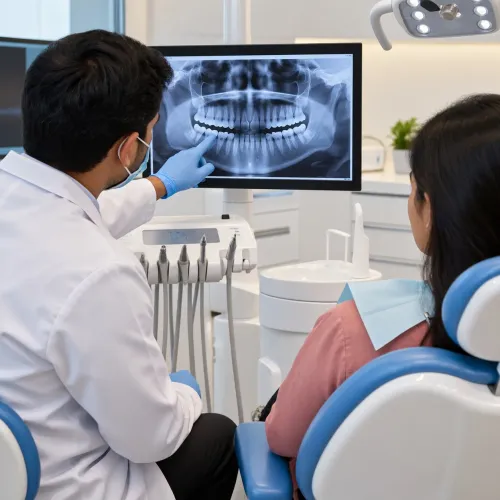
- A panoramic X-ray for an overall view of teeth, jaws and missing-tooth areas
- A 3D CBCT scan when implant position, bone volume or complex root anatomy requires it
- Diagnostic wax-ups or digital simulations to test tooth shape, bite and appearance
The choice between saving, restoring or replacing a tooth depends on its remaining structure, root condition, gum and bone support, infection status, position and long-term cleanability.
| Option | What the dentist assesses | Possible treatment |
|---|---|---|
| Save | Enough sound tooth and a restorable root | Filling, root canal treatment or periodontal care |
| Restore | The tooth is stable but weakened or worn | Inlay, onlay or crown |
| Replace | The tooth cannot provide a predictable result, or is missing | Extraction followed by an implant restoration, bridge or denture |
Full mouth rehabilitation procedures can also include gum treatment, extractions, orthodontics, bite adjustment, direct fillings, crowns, fixed bridges, removable partial dentures, complete dentures and implant-supported crowns, bridges or overdentures. Orthodontics is useful when crowding, tilting or spacing prevents cleaning or creates a poor implant site; it is not automatic.
Decisions should be explained tooth by tooth, with alternatives, risks and the maintenance each option requires.
Why Gum Health, Bite Position and Bone Matter First
Crowns, implants and other definitive restorations should wait until inflammation, infection, bite forces and supporting bone have been assessed. Otherwise, a well-made crown can loosen, an implant can fail, or a new bite can overload otherwise healthy teeth.
The assessment should establish:
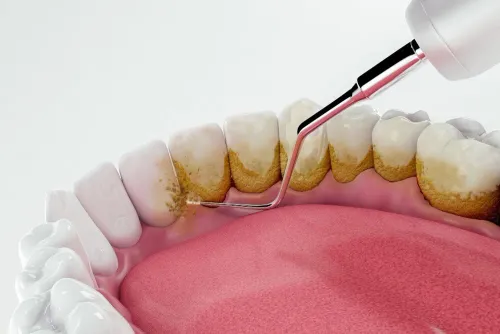
- Whether the gums are stable: measure pocket depths, bleeding, recession, tooth mobility and bone loss. Treat plaque-related inflammation with hygiene instruction, scaling or root planing before placing final crowns or implants.
- Whether each tooth is restorable: identify active decay, cracks, failed fillings, infected roots and inadequate remaining tooth structure. Complete fillings, root canal treatment or extraction of hopeless teeth before definitive work.
- Whether the bone can support planned teeth: use appropriate dental radiographs and, for selected implant cases, three-dimensional imaging to check bone volume, root position, sinus location and nerve pathways. A panoramic image alone cannot answer every implant or root-canal question.
- Whether the bite is safe: record tooth contacts, jaw position, wear, muscle strain and available space. A tilted, crowded, spaced or over-erupted tooth may need orthodontic movement before restoration or implant placement.
Orthodontics is an adjunct, not an automatic part of full mouth dental treatment. Moving teeth first can create a cleanable implant space, reduce tooth reduction and distribute chewing forces more evenly. Definitive crowns, bridges, dentures or implant prostheses should follow disease control and a stable bite, not conceal untreated problems.
The Usual Treatment Sequence and How Long It Takes
Treatment usually moves from disease control to temporary restorations, healing, definitive work and maintenance, but several stages can overlap. A written plan for full mouth rehabilitation treatment bangalore should show each phase and its expected review visits.
- First consultation: examination, records and a discussion of your goals produce the sequence and priorities.
- Disease control: treat pain, active decay, gum infection and urgent root canal or extraction needs before placing definitive restorations.
- Preparation and temporaries: reshape selected teeth, adjust the bite and place provisional crowns, bridges or dentures. These test comfort, appearance, speech and chewing.
- Healing and alignment: allow gum or extraction sites to heal. Orthodontics may come before restorations when teeth are crowded, tilted, extruded or poorly positioned for cleaning or implants.
- Final treatment: fit crowns, bridges, fillings, dentures or implant prostheses after the bite and tissues are stable.
- Maintenance: schedule examinations, professional periodontal care and checks of restorations, implants and any night guard.
| Stage | Usual time pattern | What can overlap |
|---|---|---|
| Examination and planning | Early visits | Nothing definitive should begin before the plan is agreed |
| Disease control | Days to several weeks | Temporary restorations can protect treated teeth |
| Orthodontics or implant healing | Months | Separate restorative work can proceed on suitable teeth |
| Definitive restorations | Several appointments | Different areas can be treated in stages |
| Maintenance | Ongoing | Reviews begin after each completed phase |
The total duration ranges from weeks for limited rehabilitation to many months when orthodontics, grafting or implant healing is involved. A temporary restoration is not a lifetime solution; attend reviews promptly if it cracks, loosens or changes your bite.
How to Compare a Bangalore Treatment Plan and Its Cost
There is no fixed full mouth dental restoration cost bangalore patients should expect. A sound quotation names each phase and separates diagnosis, disease control, temporary work, definitive restorations, surgery, medicines and maintenance instead of multiplying a crown price by the number of teeth.
| Quotation type | What it tells you | Main risk |
|---|---|---|
| Itemised plan | Lists scans, periodontal treatment, fillings, root canals, extractions, temporaries, crowns, bridges, implants, grafting and reviews | More effort to compare, but fewer hidden exclusions |
| Per-tooth price | Gives a narrow unit price, usually for a crown or filling | Omits gum treatment, laboratory fees, surgery and follow-up |
| Bundled estimate | Groups several procedures under one total | You cannot see which teeth, materials or visits are included |
The total rises with the number of teeth treated, teeth that cannot be saved, gum or root-canal treatment, restoration material, laboratory charges, implant and grafting needs, sedation, and temporary prostheses.
Orthodontics belongs in the estimate only when crowding, tilting or spacing affects cleaning, bite or implant placement; it is not automatic in every full mouth rehabilitation treatment bangalore plan.
Before starting, ask:
- Which teeth will you save, restore, extract or replace, and why?
- Does the fee include photographs, scans, radiographs, temporaries, anaesthesia, medicines and adjustments?
- What happens if a tooth fails after treatment begins?
- How many review and maintenance visits are included?
- What is the expected sequence and extra cost for healing or orthodontics?
At Atlas Dental Clinic, use these questions to compare the written plan, not just its headline total.
Related service
Full Mouth Rehabilitation At Atlas Dental Clinic, Kammanahalli, Bangalore, we offer comprehensive full mouth rehabilitation to restore the health, function, and aesthetics of... View service → |
Frequently asked questions
What does full mouth rehabilitation include in Bangalore?
It can combine examinations and selected procedures such as fillings, root canal treatment, gum care, crowns, bridges, implants, dentures, orthodontics and bite adjustment. The plan depends on your teeth, gums, bite and jawbone.
Which examinations are needed before full mouth dental treatment?
The assessment can include a dental examination, gum measurements, X-rays or 3D scans, bite analysis, photographs, study models and checks of existing fillings, crowns and implants.
Why must gum health, bite position and bone be assessed first?
Active gum disease, infection, an unstable bite or insufficient bone can reduce the stability of restorations and implants. These problems need assessment and treatment before final reconstruction.
How long does full mouth rehabilitation treatment take?
Treatment length depends on the number of procedures, healing requirements, gum treatment, orthodontics, extractions, implants and laboratory work. Your dentist should provide a staged sequence and estimated timeline.
How should you compare full mouth dental restoration cost in Bangalore?
Compare the written treatment stages, procedures, materials, laboratory charges, scans, temporary restorations, reviews, follow-up care and likely maintenance. Ask which alternatives are included and what is excluded.
Keywords