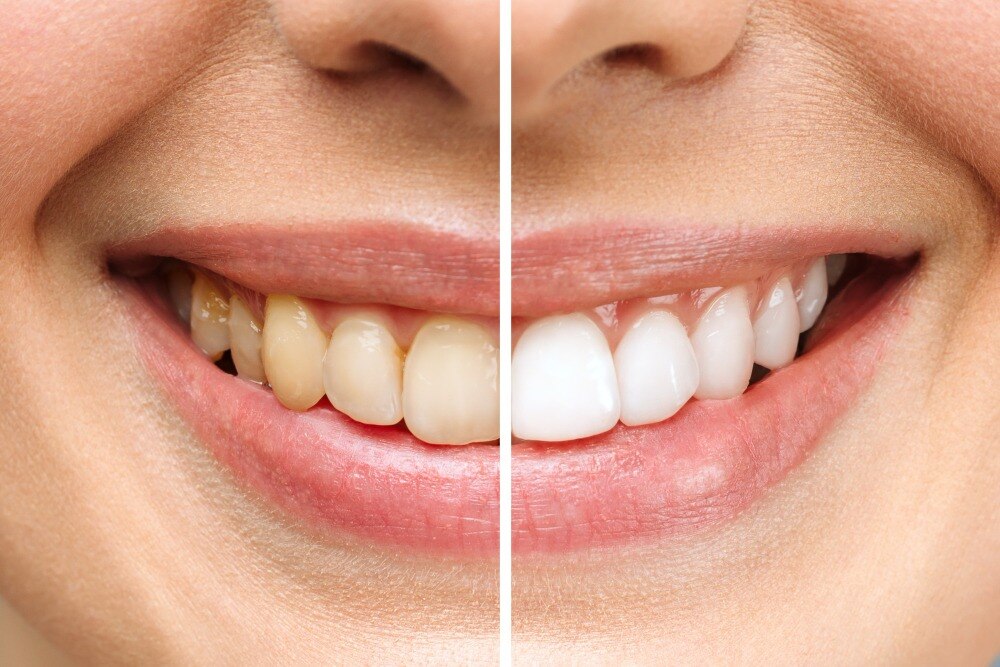
Coffee and tea stains usually sit on the tooth surface, but a yellow or brown shade that remains after cleaning can come from inside the tooth or from an existing restoration. By the end, you will know when scaling and polishing is enough, when peroxide whitening is appropriate, and why an examination should come before either treatment.
Key takeaways
- Choose cleaning for plaque, tartar and surface deposits.
- Choose whitening when natural teeth remain yellow after cleaning.
- Fillings and crowns do not whiten like natural teeth.
- Rinse with water after coffee or tea to reduce new stains.
Cleaning, whitening or both: which treatment fits coffee and tea stains?
Choose cleaning when plaque, tartar or brown surface deposits are visible; choose whitening when the teeth remain naturally yellow after those deposits are removed. Many people need both.
| Option | What it treats | When it fits |
|---|---|---|
| Cleaning | Plaque, hardened calculus and coffee or tea stain on the surface | Deposits, bleeding gums or rough teeth are present |
| Whitening | The colour of natural tooth enamel and dentine | Teeth are clean, but their underlying shade is still darker than you want |
| Both | Surface deposits first, then natural tooth colour | Heavy staining hides the tooth shade, and you want a brighter result afterwards |
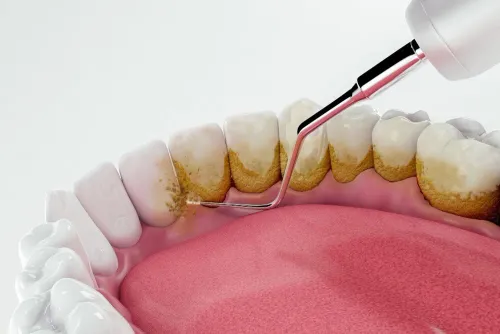
Coffee and tea usually create extrinsic stains: coloured compounds cling to the enamel’s acquired pellicle. Scaling removes calculus with ultrasonic or hand instruments, while polishing or air-polishing can lift some stain. Neither procedure bleaches the tooth, so yellow or brown colour left after cleaning can require whitening.
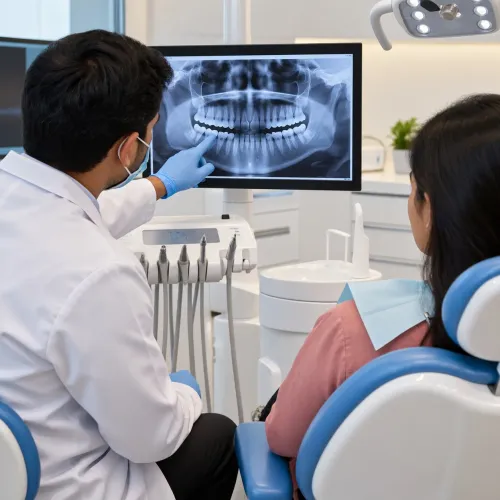
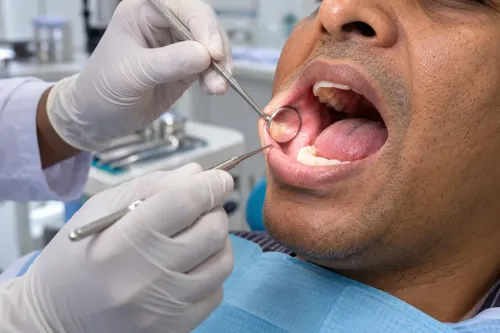
Do not choose whitening from appearance alone. An examination should check gum health, cavities, enamel condition, sensitivity risk and existing fillings or crowns. Whitening changes natural teeth, not restorations, and it will not correct intrinsic discolouration from trauma, ageing, fluorosis or medication.
If you are comparing teeth whitening or cleaning for coffee stains kammanahalli, use the examination findings rather than the location or the drink alone. Cleaning is the safer starting point when deposits are present; whitening belongs after the teeth and gums are healthy enough for it.
What happens during professional cleaning for stained teeth?
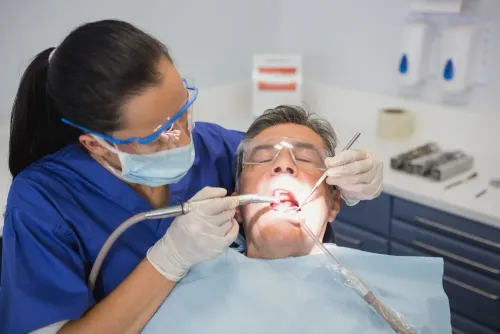
Professional cleaning removes hardened calculus and surface coffee or tea stain; it does not bleach the natural tooth. The appointment begins with an examination of your teeth and gums to identify tartar, bleeding, cavities or defective restorations.
- Scaling: An ultrasonic scaler breaks up calculus, including deposits above and just below the gumline. The dentist or hygienist uses hand instruments where precision is needed.
- Polishing: A fine paste and rotating rubber cup smooth away remaining film and light surface stain. Air-polishing powder may be used for more stubborn external stain.
- Finishing check: Your teeth are rinsed and inspected so the clinician can see what colour remains after the deposits are gone.
You may feel vibration, water spray and brief sensitivity around exposed roots. Gums can bleed when inflammation is present, and the appointment often takes about 30 to 60 minutes, depending on the amount of calculus.
This treatment can remove extrinsic stain—the brown or yellow film left by coffee, tea, tobacco or plaque. It cannot reliably remove intrinsic discoloration inside the tooth, nor does it change the base shade of enamel. A tooth that still looks dark after cleaning may need whitening or investigation for another cause.
If you search for teeth cleaning for stains kammanahalli, choose an examination-based service rather than a promise to scrub stains away. Abrasive powders, charcoal and lemon can wear enamel or irritate gums without bleaching the tooth.
How professional whitening changes the colour of natural teeth
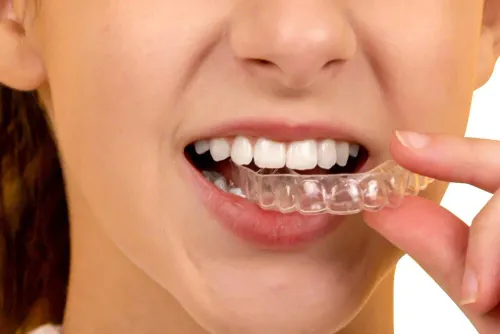
Peroxide changes the colour of natural teeth; cleaning does not. Hydrogen peroxide or carbamide peroxide breaks down the dark compounds inside enamel and dentin, making the tooth look lighter. In-clinic whitening uses a stronger gel for a shorter, supervised application, while dentist-prescribed trays use a lower concentration over several days or weeks.
Whitening works only on natural tooth structure. It will not lighten fillings, crowns, veneers or bonding, so whitening before matching a new restoration can leave a shade mismatch. Results also fade as new stain builds and the tooth’s natural colour changes.
A dentist should examine your teeth and gums before choosing professional whitening Kammanahalli patients may be considering. Scaling and polishing comes first if calculus or heavy surface deposits could block an even result.
Atlas Dental Clinic can assess whether the colour left after cleaning is surface stain, natural tooth colour or a problem needing different treatment.
Postpone whitening until these issues are treated or specifically planned:
- Untreated cavities, cracked teeth or exposed root surfaces, which peroxide can make sharply sensitive.
- Active gum disease, bleeding gums or severe existing sensitivity.
- Pregnancy or breastfeeding, unless your dentist recommends an individual plan.
- Childhood teeth, because whitening is not a routine treatment for children.
For coffee stained teeth treatment Bangalore patients should not choose by location or gel strength alone. The examination findings, restorations, gum health and sensitivity risk determine whether whitening is suitable, and whether in-clinic treatment or supervised trays are safer.
Related services
Teeth Whitening At Atlas Dental Clinic, Kammanahalli, Bangalore, we offer professional teeth whitening treatments to give you a brighter, more confident smile. View service → |
Scaling & Polishing At Atlas Dental Clinic, Kammanahalli, Bangalore, we offer professional scaling and polishing (teeth cleaning) services to maintain optimal oral... View service → |
Why fillings, crowns and intrinsic stains change the treatment choice
A brown film from coffee or tea sits on the tooth surface, so scaling and polishing can remove it. A darker tooth beneath that film needs a different assessment: whitening changes the colour of natural enamel and dentine, but it cannot repair decay or bleach material inside a restoration.
The examination must identify whether the colour is extrinsic or intrinsic. Intrinsic discolouration lies within the tooth and can follow ageing, fluorosis, childhood medication, or trauma. One injured tooth may need restorative treatment or internal bleaching rather than routine whitening, while fluorosis marks may respond unevenly and require a cosmetic plan beyond peroxide.
Check these findings before choosing treatment:
- A thick tartar ledge, bleeding gums, or a trapped stain calls for periodontal assessment and cleaning first. Whitening will not remove calculus or treat gum disease.
- A filling, crown, veneer, bridge, or implant will keep its existing colour during whitening. Natural teeth can become lighter while the restoration stays unchanged, making it look darker.
- A stained or defective filling may need polishing, repair, or replacement. Bleaching will not remove discolouration sealed inside the filling.
- A single grey or brown tooth after an injury needs evaluation for a damaged or non-vital pulp before cosmetic treatment.
- White or brown patches from fluorosis, enamel defects, or medication-related staining may not lighten evenly with standard whitening.
Cleaning can reveal the natural baseline shade. The clinician can then decide whether whitening is suitable, whether a restoration must be rematched, or whether treating the tooth itself comes first.
Safer ways to prevent new tea and coffee stains
Limit the time your teeth stay coated in coffee or tea. Drink it in one sitting instead of sipping for hours, and rinse with plain water afterwards; this dilutes staining compounds and reduces acidic exposure without scrubbing your enamel.
Use these daily habits:
- Brush twice a day with fluoride toothpaste, a soft-bristled brush and light pressure.
- Clean between your teeth once daily, because plaque gives stains a rougher surface to cling to.
- Wait about 30 minutes before brushing after acidic tea, coffee or additions such as lemon.
- Drink water alongside repeated cups, especially if you cannot rinse after each one.
Trying to remove tea stains from teeth with charcoal, abrasive powders, undiluted baking soda or lemon juice can wear enamel and irritate the gumline. Brushing harder does not bleach the tooth; it can create sensitivity and expose the yellowish dentine beneath enamel.
Do not expect rinsing or brushing to remove tartar. Hardened calculus needs professional scaling, and polishing can lift some surface stain without changing the natural colour of the tooth. Arrange an examination if brown deposits remain, your gums bleed, or stains return quickly despite careful hygiene.
Cutting down tobacco and frequent coffee or tea exposure also slows new deposits. Whitening is temporary, so these habits help preserve the result without repeated, irritating treatments.
Frequently asked questions
Should you choose teeth cleaning or whitening for coffee and tea stains?
Choose professional cleaning when plaque, tartar or brown surface deposits cover the teeth. Choose whitening when teeth remain naturally yellow after those deposits are removed. Many people need both.
What happens during professional cleaning for stained teeth?
A dental professional removes plaque and tartar with scaling, then polishes the tooth surfaces to lift external coffee and tea deposits. Cleaning does not change the natural colour inside the tooth.
How does professional whitening change the colour of natural teeth?
Professional whitening uses a peroxide-based gel to lighten the colour of natural tooth enamel and dentine. It does not whiten fillings, crowns or other restorations.
Why do fillings, crowns and intrinsic stains affect treatment choice?
Fillings and crowns retain their existing shade, so whitening can leave them mismatched with lighter natural teeth. Intrinsic stains inside the tooth may also need whitening, bonding, veneers or another treatment after examination.
How can you prevent new tea and coffee stains?
Rinse with water after drinking, avoid brushing immediately after acidic drinks, clean between teeth daily and attend regular dental examinations and professional cleaning.
Related services
Tooth-Coloured Filling At Atlas Dental Clinic, Kammanahalli, Bangalore, we provide advanced tooth-coloured fillings (composite fillings) to restore decayed or damaged teeth... View service → |
Dental Veneers At Atlas Dental Clinic, Kammanahalli, Bangalore, we offer premium dental veneers to enhance the appearance of your smile. View service → |
Full Mouth Rehabilitation At Atlas Dental Clinic, Kammanahalli, Bangalore, we offer comprehensive full mouth rehabilitation to restore the health, function, and aesthetics of... View service → |
Oral Cancer Screening At Atlas Dental Clinic, Kammanahalli, Bangalore, we offer comprehensive oral cancer screening to detect early signs of abnormalities and ensure... View service → |
Keywords