A broken tooth or missing tooth is not automatically a crown or bridge case. You will be able to follow the examination, preparation, temporary restoration, laboratory and fitting stages, then compare the alternatives and prepare useful questions for your appointment.
Key takeaways
- Check tooth structure, gums, bite, roots and bone before approving treatment.
- A crown appointment includes preparation, impressions or scans, fitting and bite checks.
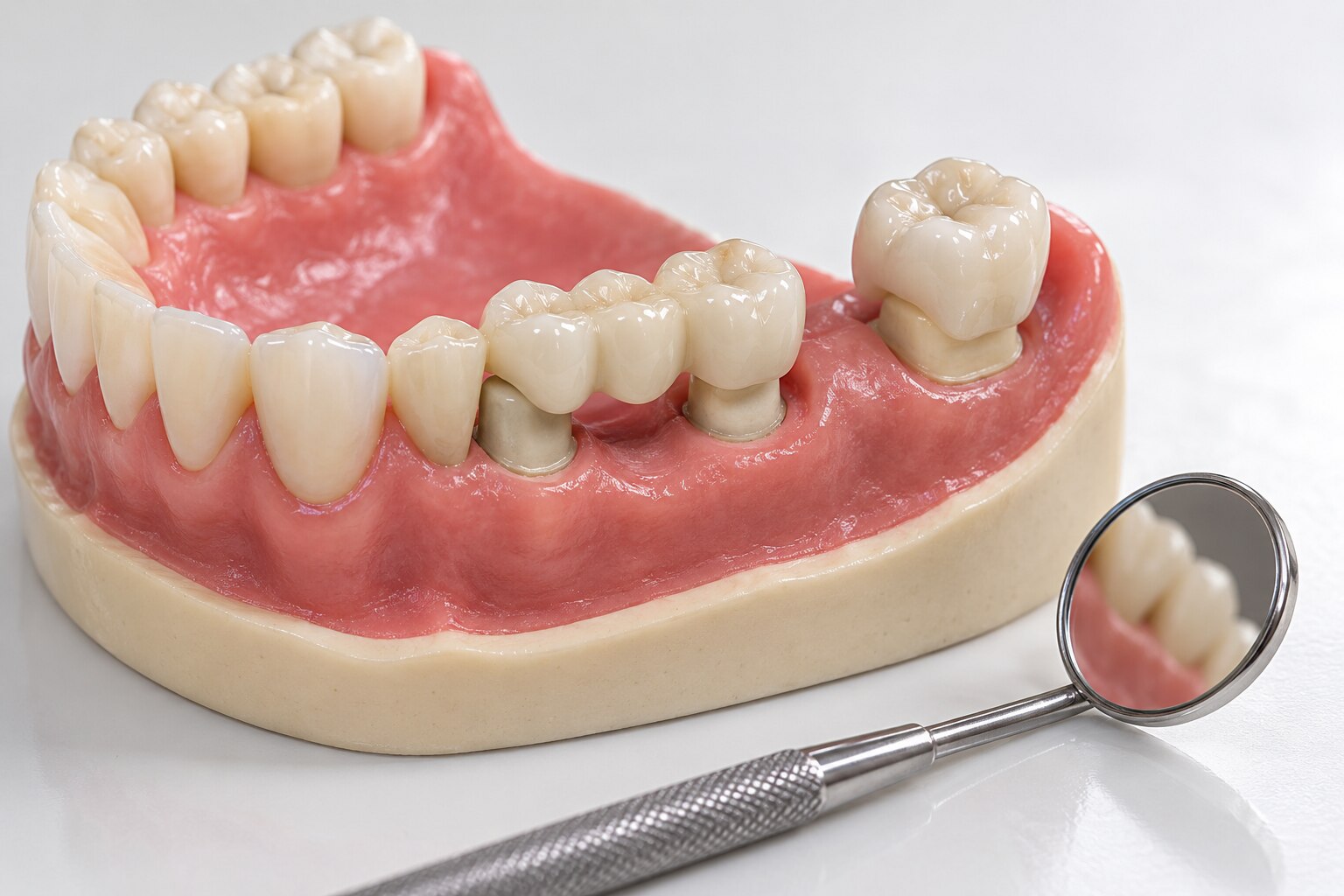
- A bridge uses prepared support teeth and a replacement tooth to close the gap.
- Compare durability, appearance, cleaning demands and cost before choosing a restoration.
Can the tooth or gap support a crown or bridge?
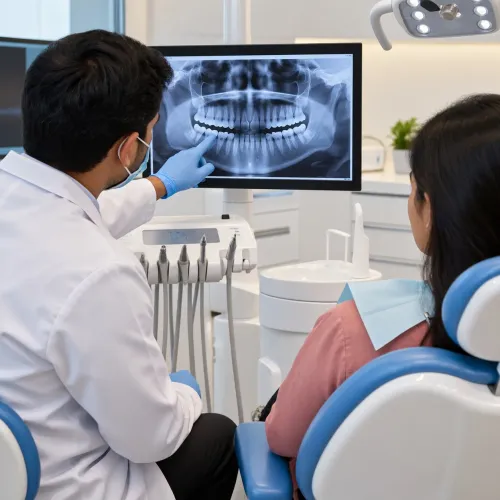
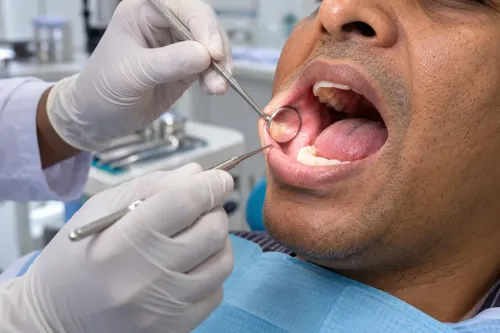
Treatment can begin immediately only when the tooth or proposed bridge supports are healthy enough to hold the restoration. The examination covers remaining tooth structure, gums, bite forces, neighbouring teeth and the surrounding bone. Dental X-rays check hidden decay, the root, bone levels and infection before treatment is approved.
For a broken tooth crown treatment, the key question is whether enough sound structure remains above the gum to retain a crown. A restorable tooth can often be rebuilt and crowned; a crack extending into the root, or a tooth that cannot hold a core and crown predictably, usually needs extraction instead.
Treatment is delayed when any of these problems need attention first:
- Active decay beneath or around the planned crown
- Irreversible pulp inflammation, infection or an abscess
- Gum disease or loose supporting teeth
- Inadequate tooth structure after fracture or decay
- Poor oral hygiene that increases failure risk
- Heavy grinding that could overload the restoration
Root-canal treatment may come first when the pulp is infected or irreversibly inflamed; a crown does not disinfect it. A post is used only when too little tooth structure remains to retain a core. It is not required for every root-treated tooth, and placing one removes further tooth structure.
For a bridge, the neighbouring abutment teeth must also have firm gum and bone support, enough structure and a bite that will not overload them.
What happens during a dental crown appointment?
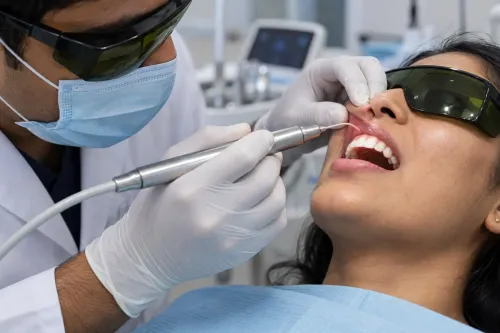
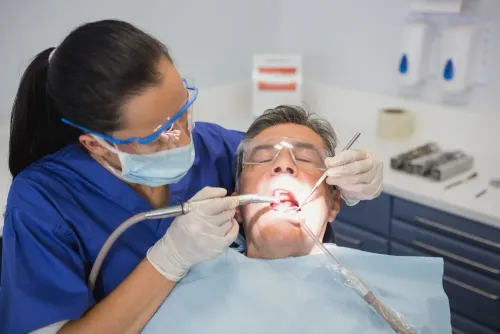
How a dental crown is fitted starts with a review of your medical and dental history, current medicines, previous X-rays if available, grinding, sensitivity and your questions. A dental crown appointment in Kammanahalli also includes an examination, and X-rays may check the root, decay and surrounding bone.
1. Discuss the crown’s shade and material, such as ceramic, zirconia, metal or a layered option. The dentist gives local anaesthetic, removes decay and reshapes the tooth to create clearance and a stable path of insertion.
2. The dentist takes a conventional impression or digital scan, records your bite and fits a temporary crown. Preparation and records often take 60 to 90 minutes. A laboratory then makes the permanent crown; selected cases can use chairside CAD/CAM for completion in one day.
3. At the later fitting visit, the dentist checks the margin fit, contacts with neighbouring teeth, shade and bite. The crown is adjusted if needed before final cementation.
4. If preparation reveals further decay, treatment must remove it before the crown proceeds. A crack extending into the root may make the tooth unrestorable, while infection can require root-canal treatment first; extraction becomes necessary when the tooth cannot be saved.
Bring medication details, previous X-rays, your questions and information about grinding or sensitivity. Ask how long the temporary crown will remain and what to do if it loosens.
How is a dental bridge made and fitted?
A gap does not decide whether a bridge is suitable. The dentist assesses the neighbouring teeth, gum and bone support, bite forces, and how many sound teeth can serve as abutments. Dental bridge treatment in Bangalore follows the same biological and mechanical requirements: weak supports or an overloaded bite can cause failure.
| Design | How it is supported | Main trade-off |
|---|---|---|
| Conventional fixed | A false tooth joins crowns on prepared neighbouring teeth | Stronger support, but preparation is irreversible |
| Cantilever | The false tooth is attached on one side only | Limited for high-force areas and some bites |
| Maryland or resin-retained | A false tooth is bonded using wings on adjacent teeth | Preserves more tooth structure but can debond |
For a conventional bridge, local anaesthetic is used before the abutment teeth are reshaped to create clearance and a stable path of insertion. The dentist takes impressions or digital scans and records your bite, then fits a temporary bridge while a laboratory makes the final restoration.
At the try-in, the dentist checks the margins, contacts, appearance and bite before cementing it permanently.
Clean beneath the replacement tooth every day with a floss threader or interdental brush, because trapped plaque can inflame gums and cause decay at crown edges. A bridge is not simply a crown placed in the empty space: it is a connected restoration that depends on suitable supporting teeth and careful maintenance.
Which restoration, material or replacement option fits the problem?
Choose the least invasive option that can withstand the tooth’s job. A filling suits a small or moderate cavity; an onlay covers damaged cusps while preserving more sound tooth. A crown suits a heavily weakened tooth, while a veneer covers the visible front surface and does not rebuild major structural loss.
| Option | What it replaces or repairs | When it applies |
|---|---|---|
| Filling | Small to moderate decay | Enough healthy tooth remains |
| Onlay | Damaged cusps | Cuspal coverage is needed without a full crown |
| Crown | Heavily weakened tooth | A predictable, retainable tooth remains |
| Veneer | Visible front surface | Appearance is the main concern, not structural rebuilding |
| Bridge | One missing tooth | Neighbouring teeth provide suitable support |
| Implant | One missing tooth | Adequate bone and surgical planning permit replacement without preparing adjacent teeth |
| Partial denture | Several missing teeth | A removable multi-tooth replacement is acceptable |
| Root-canal treatment | Infected or irreversibly inflamed pulp | The pulp must be removed before restoring the tooth |
A root canal does not replace the crown needed after major structural loss; it treats infection inside the tooth. If too little tooth remains, extraction and replacement may be safer.
For crowns and bridge frameworks, porcelain-fused-to-metal offers a ceramic appearance with a metal core; all-ceramic gives the most natural translucency; zirconia offers high strength and can be thinner; metal needs the least space and resists heavy loading but shows. Choose around front-tooth aesthetics, back-tooth forces, available clearance and grinding habits.
No material is best for every bite.
How should you prepare for fitting and protect the result?
Before booking, confirm the expected number of visits, approximate chair time, whether local anaesthesia is planned, and whether the restoration will be ceramic, zirconia, metal or layered. Ask whether the fee includes X-rays, core build-up, root-canal treatment, laboratory work and later bite adjustments.
- Ask for clear temporary-restoration instructions. Temporary crowns and bridges are weaker and less accurately fitted than final restorations, so avoid sticky foods, chew carefully and call if the temporary loosens.
- After cementation, brief cold or pressure sensitivity can occur. Persistent pain, spontaneous throbbing, swelling, looseness or a high-feeling bite needs review; a high bite can overload the tooth and may need adjustment.
- Protect the crown margins by brushing twice daily and cleaning around the gumline. For bridges, clean beneath the replacement tooth with a floss threader or interdental brush, following the method demonstrated by your dental team.
- Keep the treatment plan and fee inclusions in writing. Atlas Dental Clinic can be useful to contact in Kammanahalli when you want the stages, material choices and inclusions clarified before scheduling.
Crowns and bridges are not permanent for life. A practical service expectation is roughly 5 to 15 years, depending on hygiene, gum health, bite forces, diet, material and the condition of the supporting teeth. Regular examinations can identify decay, gum problems, wear or cement failure before they damage the restoration.
Related service
Dental Crowns & Bridges At Atlas Dental Clinic, Kammanahalli, Bangalore, we provide advanced dental crowns and bridges to restore the strength, function, and appearance of... View service → |
Frequently asked questions
Can any broken tooth support a crown?
No. The dentist must assess remaining tooth structure, gum health, bite forces, root condition, infection and surrounding bone first.
What happens during a dental crown appointment in Kammanahalli?
The tooth is examined and prepared, impressions or a digital scan are taken, and the finished crown is checked for fit, contacts, colour and bite before cementation.
How is a dental bridge made and fitted?
The teeth beside the gap are assessed and prepared when suitable. The dentist records the space, has the bridge made, then checks its fit, bite and appearance before securing it.
How do you choose between a crown, bridge and another replacement?
Compare the remaining tooth structure, support teeth, gum and bone health, bite forces, appearance, cleaning access, treatment time and long-term maintenance.
How should you protect a new crown or bridge?
Follow cleaning instructions, brush twice daily, clean beneath a bridge with suitable interdental tools, avoid using the restoration to bite hard objects and attend reviews.
Keywords