A chipped front tooth does not automatically need a veneer. The right choice depends on how much enamel remains, whether the tooth was injured, how your bite loads it and whether a simpler repair can preserve more natural structure; by the end, you will have a practical way to compare those options and prepare for a consultation.
Key takeaways
- Veneers need healthy enamel, stable teeth and no deep cracks or active decay.
- Bonding preserves more tooth structure and suits small, straightforward chips.
- Crowns protect heavily weakened teeth but require more tooth reduction.
- Check bite, grinding, gum health and treatment longevity before choosing veneers.
When is a chipped front tooth suitable for a veneer?
A veneer suits a chipped front tooth only when enough healthy enamel and dentine remain to support it. The tooth must be firm, free of active decay, and free of a crack extending below the gumline. Your dentist also needs to check the pulp, gum health, bite and grinding habits before recommending treatment.
Use this checklist before agreeing to a veneer:
- The chip is limited to the visible front or incisal edge, with substantial tooth structure still intact.
- The tooth is not loose, tender to biting, or discoloured from a damaged pulp.
- There is no untreated decay, bleeding gum disease or infection around the tooth.
- The fracture does not run below the gumline or deep into the root.
- Your bite does not place heavy force on the veneer, and clenching or grinding is controlled.
- You want a broader change in tooth shape or colour, not only a repair of a tiny chip.
- You accept that conventional veneers usually require enamel removal, which does not grow back.
A deep fracture, major loss of structure or pulp injury may require root-canal treatment followed by a crown or another restoration. Treat gum disease, decay or an unstable bite first; placing a veneer over those problems increases failure risk.
For a small, clean chip, ask about smoothing the edge or additive composite bonding before removing enamel. Bonding usually preserves more natural tooth structure and is easier to repair, while a veneer is a more extensive, irreversible cosmetic decision.
How does a veneer compare with bonding, smoothing or a crown?
For a tiny chip on healthy enamel, smoothing or additive composite bonding usually offers the best balance: maximum enamel preservation, easy repair and the lowest initial cost. A veneer becomes more reasonable when you want a broader change in shape or colour, or when bonding is unlikely to withstand your bite.
| Option | Enamel preservation | Appearance and strength | Repairability and long-term cost |
|---|---|---|---|
| Smoothing | Preserves all enamel | Natural result, but removes only a sharp edge | No restoration to repair; limited cosmetic change |
| Composite bonding | Usually preserves most enamel | Good colour and shape match; less resistant to staining and wear | Easy to patch or replace; usually lower initial cost |
| Ceramic veneer | Removes facial enamel; irreversible | Highly natural appearance and better stain resistance; strong but not unbreakable | A chipped or debonded veneer often needs repair or replacement |
| Crown | Removes substantially more tooth structure | Covers a weakened tooth; strong, but less conservative | More costly biological commitment; replacement eventually removes more structure |
| Root canal plus crown | Requires treatment of an injured or infected pulp | Suitable for a badly damaged tooth, not a minor chip | More appointments and expense; not justified for healthy pulp |
The best answer to “should i get veneers for chipped teeth” depends on the trade-off you accept. Ask how many millimetres of enamel will be removed, whether the veneer is ceramic or composite, and what happens if it debonds.
Photographs, a mock-up, bite analysis and a grinding assessment help prevent an attractive design from failing under your bite. For a minor chip, discuss bonding or recontouring first.
What happens during front tooth veneer treatment?
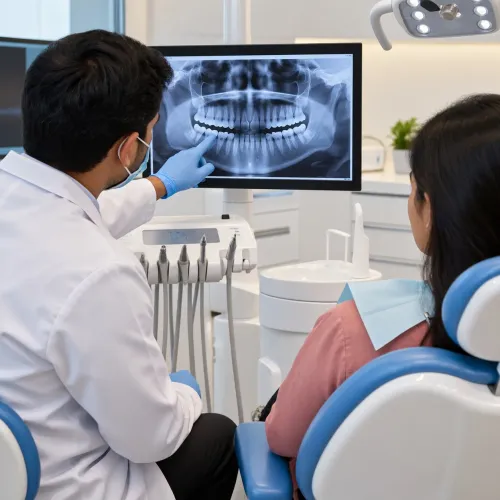
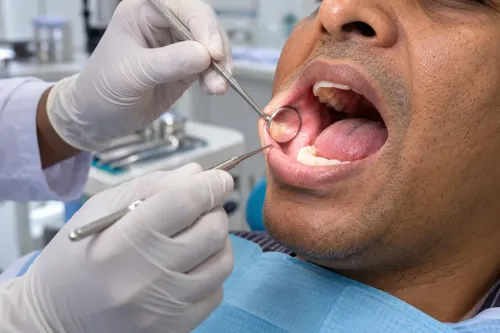
The first appointment establishes whether front tooth veneer treatment is safe and worthwhile. The dentist examines the chip, remaining enamel, cracks, decay, gum health, tooth movement and pulp symptoms. X-rays or vitality tests may be needed, especially after an impact.
The bite and habits such as clenching or grinding are also assessed because heavy forces can loosen or fracture a veneer.
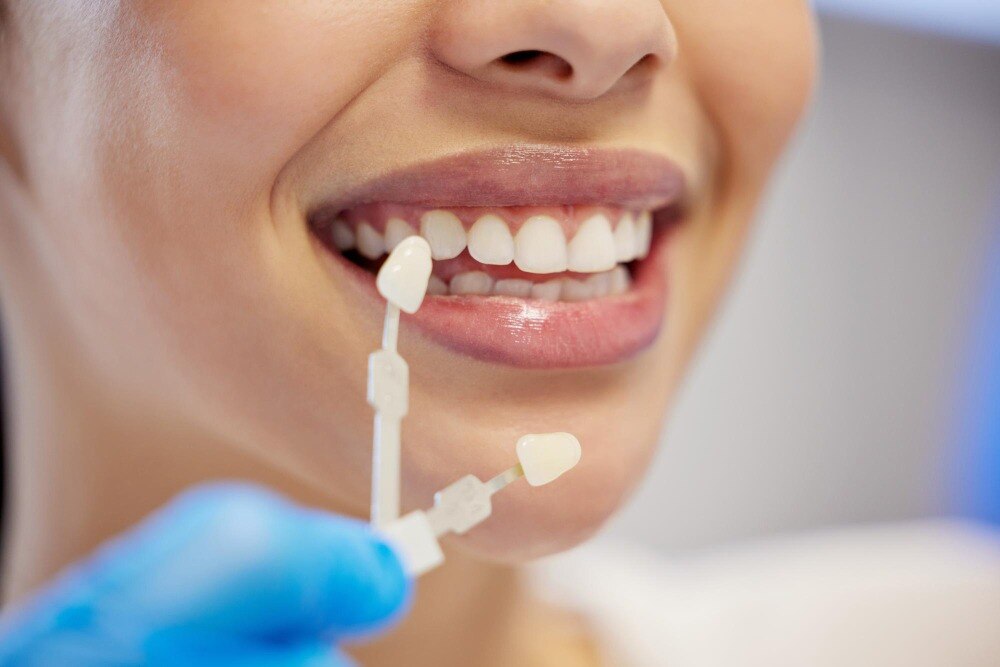
1. The dentist records photographs, tooth colour and proportions, then discusses the desired shape and shade. A digital scan, impression or mock-up helps you preview the proposed result.
2. If the tooth is suitable, the dentist prepares the facial surface by removing a controlled layer of enamel. This is irreversible because enamel does not grow back. A deep fracture, decay, weak remaining structure or damage below the gumline calls for a different plan.
3. The prepared tooth is scanned or impressed for a laboratory-made veneer. A temporary covering may protect it while the final veneer is made, although the exact arrangement varies.
4. At the fitting visit, the dentist tries the veneer in with a temporary gel to check its colour, edge position, contact with neighbouring teeth and your approval. Adjustments happen before bonding.
5. After cleaning and isolating the tooth, the dentist conditions the enamel, applies dental adhesive and resin cement, seats the veneer and hardens the cement with a curing light. Excess cement is removed.
You then bite on marking paper so high spots can be adjusted. A bite that remains heavy on the veneer increases the risk of fracture or debonding.
What are the long-term trade-offs after a veneer?
A veneer is a years-long commitment, not a permanent repair. Judge durability by the remaining enamel, ceramic or composite material, cementation quality, bite and maintenance—not by the word “porcelain” alone. Fracture, debonding, decay at the margin and gum problems can still lead to failure.
Brief sensitivity after preparation can settle. Do not mask these warning signs with a cosmetic veneer:
- Spontaneous pain
- Pain that lingers after hot or cold
- Swelling or tenderness when biting
They need investigation for pulp inflammation, decay or a crack.
Porcelain resists staining better than natural tooth structure and composite, but the veneer’s edges do not protect against plaque. Brush twice daily with fluoride toothpaste, clean between the teeth, attend examinations and treat bleeding gums promptly. Decay or gum recession at the margin can compromise an otherwise intact veneer.
Protect it from hard objects, opening packets with your teeth, nail biting and grinding or clenching. Heavy bite forces raise the risk of fracture or debonding; a night guard is useful only after the fit and bite have been assessed.
A failed veneer may need composite repair, but a fractured or repeatedly loose veneer usually requires replacement rather than polishing. Ask what happens after debonding, how repairs are handled and what replacement would involve before treatment.
How should you decide about veneers for chipped teeth in Bengaluru?
Choose dental veneers for chipped front teeth in Bengaluru only after you understand what will be removed, how the tooth is loaded, and what happens if the veneer fails. Ask these questions before agreeing:
- How much enamel will you remove, and can the repair be additive?
- Will you show a mock-up or digital preview before preparation?
- Is the chip free of decay, cracks, pulp injury and damage below the gumline?
- How did you assess clenching, grinding, the bite and the need for a night guard?
- Is composite or ceramic proposed, and what is the repair or replacement plan?
- If nearby teeth will be whitened, will bleaching happen before selecting the veneer shade?
Atlas Dental Clinic can help you compare the planned enamel reduction, bite findings and material choice rather than judging veneers for chipped teeth in Bengaluru by quoted price or laboratory name alone.
| Option | Enamel removal | Repair and best use |
|---|---|---|
| Composite bonding | Usually minimal or none | Easier to repair; suits a small chip on healthy enamel |
| Ceramic veneer | Requires enamel preparation | Better for a broader shape or colour change, but replacement is more involved |
| Crown | Removes substantially more tooth structure | Suits a weakened tooth or large fracture, not a minor chip |
Choose smoothing or bonding when the chip is small, the tooth is strong, the gums are healthy and appearance can be restored without sacrificing sound enamel. Delay cosmetic treatment if decay, gum disease, severe grinding, an unstable bite, looseness, a deep crack or a fracture below the gumline needs treatment first.
Related service
Dental Veneers At Atlas Dental Clinic, Kammanahalli, Bangalore, we offer premium dental veneers to enhance the appearance of your smile. View service → |
Frequently asked questions
When is a chipped front tooth suitable for a veneer?
A veneer suits a firm tooth with enough healthy enamel and dentine, no active decay, and no crack extending below the gumline. Your dentist must also assess the pulp, gums, bite and grinding habits.
How do veneers compare with bonding, smoothing or a crown for a chipped tooth?
Smoothing suits a very small chip, bonding preserves more tooth structure, and a crown provides greater coverage for a weakened tooth. A veneer sits between bonding and a crown in coverage and tooth preparation.
What happens during front tooth veneer treatment?
Treatment includes an examination, bite and gum assessment, shade planning, preparation of the tooth when needed, an impression or digital scan, a temporary restoration when required, and placement of the finished veneer.
What are the long-term trade-offs after getting a veneer?
A veneer can restore appearance and shape, but it is not permanent. You must protect it from hard objects and biting forces, manage grinding, maintain gum health and replace it if it chips, loosens or wears.
Should I get veneers for chipped teeth in Bengaluru?
Choose after comparing the chip’s size, tooth strength, bite, appearance goals, maintenance and alternatives. Ask your dentist why a veneer is preferable to bonding, smoothing or a crown for your tooth.
Keywords