A cavity or chipped edge needs more than material placed into a hole: the tooth must be examined, cleaned, bonded and rebuilt so it can tolerate chewing. You will be able to judge whether a composite filling suits your damage, understand the procedure and compare it with restorations that provide greater structural support.
Key takeaways
- Composite fillings bond to tooth structure and match your natural shade.
- X-rays reveal decay depth before the dentist plans treatment.
- Ask about material, shade matching, bite adjustment and expected lifespan.
- Deep decay may require a crown or root canal instead of a filling.
What happens during tooth-coloured filling treatment?
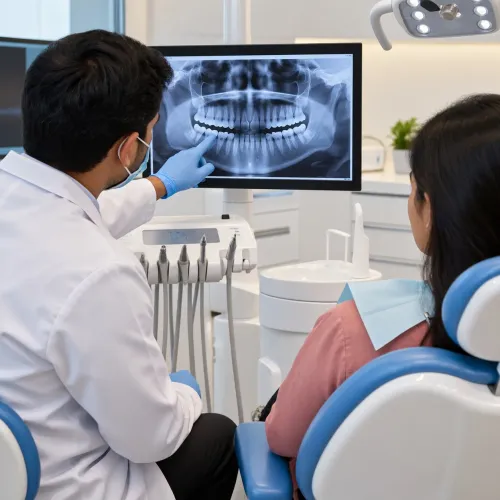
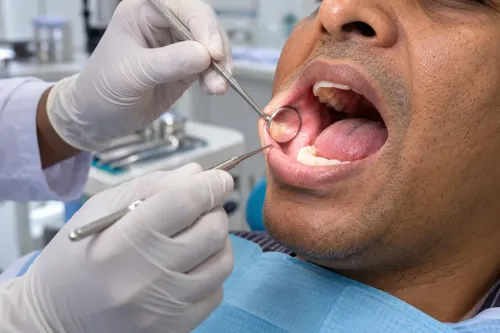
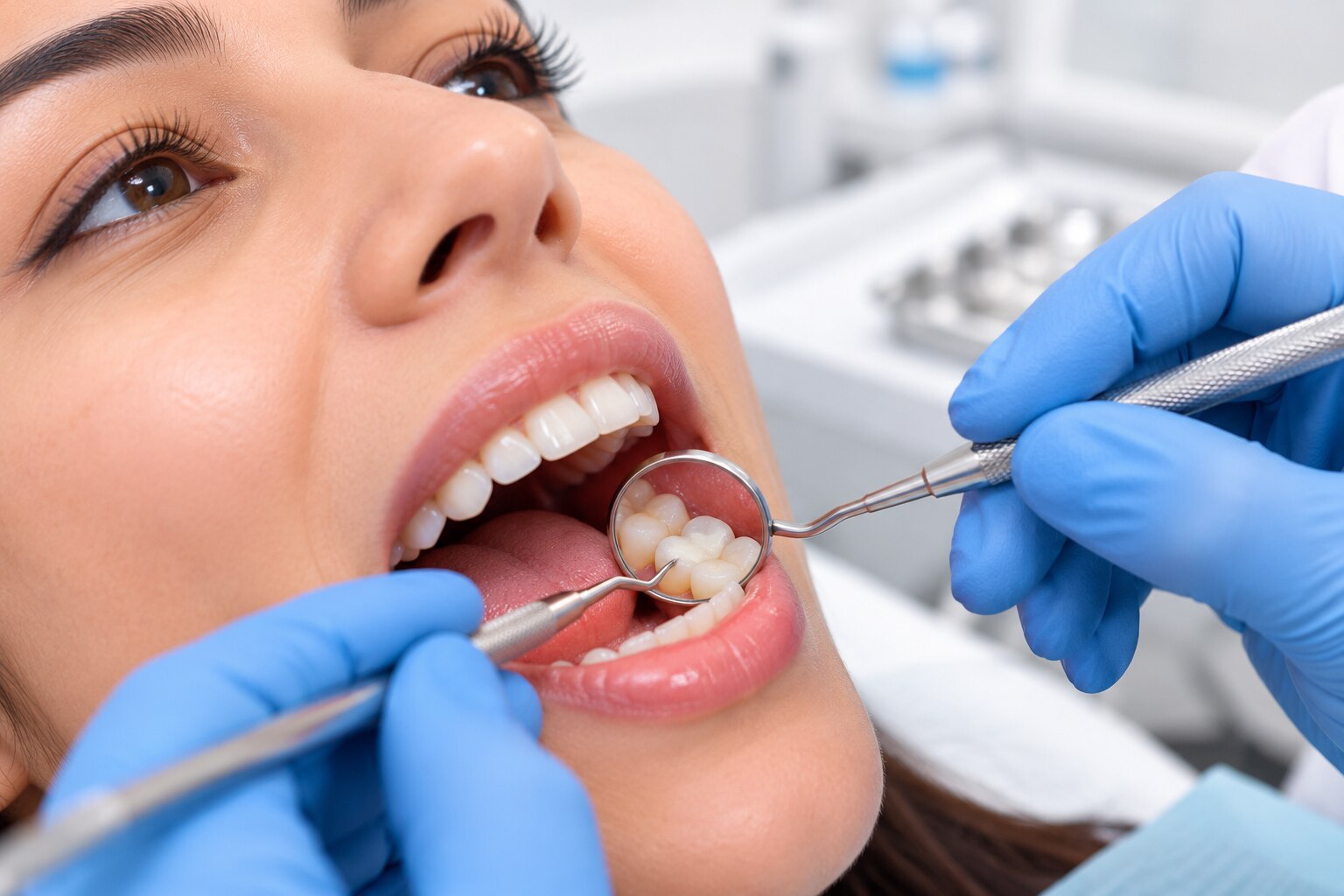
A composite filling appointment starts with an examination of the tooth and, when needed, an X-ray to check the decay’s depth. The dentist selects the shade before drying the tooth, because dehydration makes enamel look temporarily lighter. Local anaesthetic keeps the procedure comfortable if the cavity is sensitive or deep.
1. The dentist removes decayed or weakened tooth structure and shapes the cavity for a stable restoration. A rubber dam or another moisture-control method keeps saliva and blood away; contamination can weaken the bond.
2. The prepared enamel and dentine are etched, rinsed and treated with bonding agent. This creates the surface that attaches the composite securely to the tooth.
3. The dentist places tooth-coloured resin composite in small increments. A dental curing light hardens each layer before the next one is added, reducing gaps and helping rebuild the tooth’s contour.
4. The hardened filling is trimmed and polished. You bite on marking paper while the dentist checks chewing contact and removes any high spot.
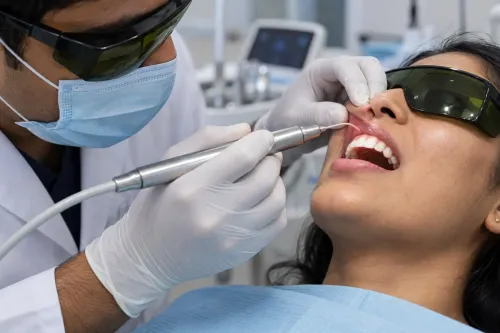
During tooth filling treatment in Bengaluru, you will feel pressure, vibration and water spray rather than sharp pain once the anaesthetic works. Your lip or cheek can remain numb for a few hours, so avoid chewing until sensation returns.
A white filling restores lost shape and function; it does not prevent new decay around the edges.
Which types of tooth damage can a composite filling restore?
A composite filling is suitable when decay or a fracture has removed a small or moderate amount of tooth structure, especially on a visible front tooth. It can repair chipped enamel, worn edges and an old visible filling while preserving more healthy tooth than extensive preparation.
The benefits of tooth coloured fillings in Bengaluru include shade matching and a less noticeable result, but composite does not regenerate enamel or prevent new decay.
A filling becomes a poor choice when the remaining tooth cannot withstand normal biting forces. Ask about these alternatives when the examination shows:
- A large cavity with several walls missing: an inlay may provide a stronger, laboratory-made fit.
- A missing cusp or weakened chewing surface: an onlay covers and protects one or more cusps.
- Extensive structural loss, repeated fractures or a heavily restored tooth: a crown encases the tooth.
- Spontaneous toothache, prolonged sensitivity to heat or cold, pain on biting, swelling or an abscess: root canal treatment may be needed before a final restoration.
| Option | What it restores | When it applies |
|---|---|---|
| Composite filling | Localised loss of tooth structure | Small-to-moderate cavities, chips and worn edges |
| Inlay | Damage within the cusps | A larger cavity with sound cusps |
| Onlay | One or more weakened cusps | Cusp damage without loss requiring full coverage |
| Crown | Most of the visible tooth | Extensive loss or fracture risk |
| Root canal treatment | Diseased or infected pulp | Infection, abscess or irreversible pulp inflammation; a filling or crown follows |
How do composite fillings compare with other restoration materials?
Composite is usually the most discreet option for visible teeth and small-to-moderate cavities. The white filling advantages in Bengaluru are strongest when shade matching, a natural surface and preservation of sound enamel matter.
Adhesive bonding can reduce the need for the wider mechanical preparation used for amalgam, but the dentist still removes decayed or unsupported tooth structure.
| Option | Practical difference | When it applies |
|---|---|---|
| Composite | Tooth-coloured, bonded directly, conservative and repairable; sensitive to moisture during placement and more vulnerable to staining or wear | Visible teeth and small-to-moderate cavities |
| Silver-coloured amalgam | Strong under chewing forces, metallic in appearance and retained mainly by cavity shape; it may require removal of more sound tooth structure | Large load-bearing back-tooth cavities when appearance is not the priority |
| Glass ionomer cement | Tooth-coloured to an extent, chemically bonds to tooth and releases fluoride, but is weaker and less polishable than composite | Small low-stress areas, root-surface cavities or selected temporary restorations |
| Ceramic | Made as an inlay, onlay or crown outside the mouth; highly natural-looking and wear-resistant, but needs more appointments, tooth preparation and expense | Larger defects or damaged cusps that need indirect, cusp-covering support |
A large back-tooth cavity is not automatically a composite case. If a cusp is missing or the tooth is cracked, an onlay or crown can protect it better than a direct filling. None of these materials prevents new decay around its edges; plaque control and fluoride exposure still determine the surrounding tooth’s future.
What affects the appearance, comfort and lifespan of a white filling?
Shade matching is most accurate before the tooth dries. A dehydrated tooth temporarily looks lighter, so choosing a shade after isolation can leave the filling visibly pale when the tooth rehydrates. Polishing gives natural-looking dental fillings in Bengaluru a smoother, less noticeable surface, but it cannot correct a poorly chosen shade.
Composite is not stain-proof. Tea, coffee, tobacco and deeply coloured foods can darken its surface over time; polishing can remove superficial stains, while deep discoloration or a mismatch may require repair or replacement. Plan whitening before placing composite on visible teeth: natural enamel becomes lighter, but the filling does not.
Bonding quality affects both comfort and lifespan. Saliva or blood contamination weakens the bond and can allow sensitivity, marginal staining or early failure, so effective moisture control, correct etching, bonding and light-curing matter.
A high bite on one filling can cause tenderness, chipping or fracture, especially in a heavily loaded back tooth with substantial cusp loss.
Protect the result after treatment:
- Brush twice daily with fluoride toothpaste and clean around the filling.
- Avoid biting pens, ice or other hard objects with the restored tooth.
- Return for review if your bite feels high, sensitivity persists, or an edge chips.
Good aftercare cannot compensate for a filling placed where chewing forces exceed the material’s support.
What should you ask a Bengaluru dentist before choosing a filling?
Before you agree, ask what the examination actually found—not simply whether a white filling is possible. Ask for:
- The size and depth of the decay, including findings from an X-ray if decay lies between teeth or under an old restoration.
- The pulp assessment and whether lingering pain, heat sensitivity or tenderness suggests root canal treatment instead.
- Any crack, weakened cusp, heavy bite contact or moisture-control problem that could shorten the restoration’s life.
- The expected shade, with selection made before the tooth dries and appears temporarily lighter.
| Option | What to confirm | When it applies |
|---|---|---|
| Composite filling | How the dentist will isolate the tooth and restore the contact and bite | Small to moderate decay or limited fracture |
| Glass ionomer cement | Its lower cosmetic performance and likely need for replacement | Selected areas where fluoride release or moisture tolerance matters |
| Inlay, onlay or crown | How much cusp and wall support remains | Large cavities, heavy chewing forces or major structural loss |
| Root canal treatment and restoration | Whether the pulp is infected or irreversibly inflamed | Spontaneous pain, prolonged sensitivity or pulp exposure |
Ask how the dentist will prevent saliva or blood contamination during tooth filling treatment in Bengaluru, and whether a rubber dam is suitable. The benefits of tooth coloured fillings in Bengaluru depend on that technique, not colour alone.
At Atlas Dental Clinic, ask which review interval applies, whether bite adjustment is included, and when to return for sensitivity, a rough edge or a loose filling. Confirm that brushing with fluoride toothpaste, cleaning between teeth and limiting frequent sugar exposure remain necessary.
Related service
Tooth-Coloured Filling At Atlas Dental Clinic, Kammanahalli, Bangalore, we provide advanced tooth-coloured fillings (composite fillings) to restore decayed or damaged teeth... View service → |
Frequently asked questions
What happens during tooth-coloured filling treatment?
The dentist examines the tooth, takes an X-ray when needed, selects the shade before drying, numbs the area if necessary, removes decay, bonds composite layers to the tooth and adjusts your bite.
Which types of tooth damage can a composite filling restore?
Composite fillings can restore small to moderate cavities, chipped edges, worn areas and some fractured tooth surfaces. Extensive damage may need a crown, inlay or root canal treatment.
How do composite fillings compare with other restoration materials?
Composite fillings provide a natural appearance and bond directly to tooth structure. Amalgam is durable but silver-coloured, while ceramic restorations suit larger repairs and usually require more laboratory work.
What affects the appearance, comfort and lifespan of a white filling?
Shade selection, moisture control, bite pressure, cavity size, oral hygiene, tooth location and habits such as chewing ice affect the result. A dentist can polish or replace a filling when needed.
What should you ask a Bengaluru dentist before choosing a filling?
Ask how deep the decay is, whether you need an X-ray, which material is suitable, how the shade will be matched, whether your bite will be checked and what alternatives and follow-up care apply.
Keywords