Age alone does not decide whether a damaged tooth can support a crown. By checking the tooth, gums, bite, general health and ability to maintain the restoration, you can compare a crown with less-invasive treatment or tooth replacement and prepare for the appointments involved.
Key takeaways
- Age alone does not rule out a crown; tooth support and cleanability matter.
- A crown suits a cracked or heavily restored tooth better than a filling.
- A crown does not always require root canal treatment.
- Plan for healing, transport and medication instructions after treatment.
What determines whether an older adult can have a crown?
Chronological age alone does not determine whether an older adult can receive a crown. Dental crowns for older adults in Bengaluru are suitable when the tooth is restorable, has adequate support and can be kept clean after treatment.
- Examine the tooth for remaining enamel and dentin. A large filling, extensive decay or a fractured cusp may justify a crown, but too little sound structure can make extraction safer.
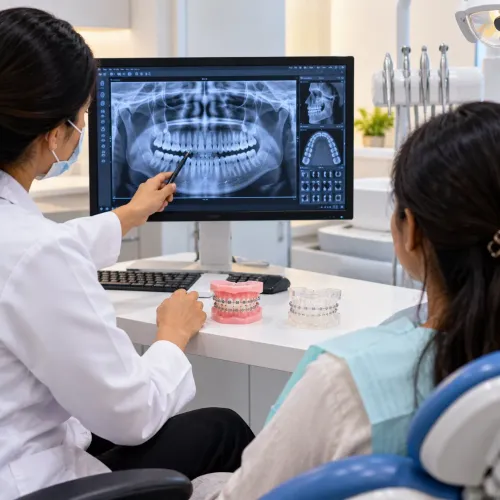
- Take dental X-rays to check the roots, bone support and decay below the gumline. A root fracture or severe bone loss can disqualify the tooth.
- Test the nerve and inspect for cracks. Persistent infection may require root canal treatment before a crown; an unrestorable crack may require removal.
- Measure gum pockets and assess bleeding, mobility and periodontal support. A loose tooth cannot reliably hold a crown until its supporting tissues are treated.
- Check bite forces, grinding, neighbouring teeth and chewing needs. Heavy force increases fracture risk and may change the material or treatment plan.
- Assess brushing, interdental cleaning, hand control, vision and caregiver help. A crown still needs cleaning at its margin, and dry mouth from medicines or illness increases decay risk.
A crown is irreversible because the dentist removes tooth structure to create space. Compare it with a filling, inlay or onlay when enough tooth remains; compare a bridge, denture or implant when the tooth is missing. General health, appointment access and the ability to maintain hygiene matter as much as age.
When is a crown better than a filling, onlay or tooth replacement?
Choose a crown when a damaged tooth still has a sound, restorable root but too little structure for a filling or onlay.
Crowns for weak teeth in Bengaluru can protect remaining cusps from fracture after extensive decay, a large failing filling or a crack, but they do not prevent decay at the margin or root caries.
| Option | Preserves or replaces | When it fits |
|---|---|---|
| Crown | Covers and reinforces an existing tooth | Extensive damage leaves a sound root and enough tooth to retain it |
| Filling | Rebuilds a limited area with minimal drilling | Decay is small and the surrounding cusps remain strong |
| Onlay | Covers one or more weakened cusps without full coverage | More structure remains than a crown requires |
| Bridge, denture or implant | Replaces a missing tooth | The tooth is unrestorable or already absent |
A crown is irreversible: placing it requires removal of natural enamel and dentin. Ask whether a direct filling, inlay or onlay would restore function with less reduction; choose the crown when those options would leave the tooth vulnerable to splitting.
Do not proceed with a definitive crown until the cause of failure is addressed. Extraction or another replacement plan is safer when the tooth has:
- Decay extending below the gumline or too little remaining structure to hold a crown
- A vertical root fracture or an unrestorable crack
- Severe bone loss, deep active periodontal pockets or poor gum support
- Uncontrolled decay or plaque that makes the margin impossible to maintain
If cleaning is unreliable because of limited dexterity, dry mouth or inadequate support at home, improve the hygiene plan first. Compare chewing needs, adjacent teeth, bone, appointment burden and cleaning demands before selecting a bridge, denture or implant.
Does a crown require a root canal, and how does an implant crown differ?
A crown on a natural tooth does not automatically require a root canal. Before removing tooth structure, the dentist checks whether decay or a crack has reached the pulp, whether infection exists around the root tip, and whether the nerve responds normally to cold or other vitality tests.
Irreversible pulp inflammation or infection calls for root-canal treatment before or alongside crown placement; a deep, unfavourable crack or too little remaining tooth may make extraction safer.
Tooth restoration for seniors in Bengaluru should include these checks:
- X-rays to identify decay below the gumline, bone loss, hidden infection and root condition.
- Examination of cracks, remaining enamel and dentin, and the amount of tooth available to hold a crown.
- Gum-pocket measurements and plaque assessment, because active periodontal disease can undermine support and contaminate crown margins.
- A bite assessment, since heavy forces can fracture a weakened tooth or overload an implant.
Natural-tooth crown | Implant crown Restores | Covers a prepared tooth with a living or root-treated natural root | Covers an abutment attached to a dental implant replacing a missing root Nerve health | The pulp must be healthy or treated with root canal therapy | No natural tooth nerve exists, so root canal treatment is not involved Main risks | Recurrent decay, root fracture and gum disease | Poor implant integration, bone loss, looseness and difficult cleaning Best fit | A damaged tooth with enough sound structure and support | A missing tooth with suitable bone, gum health and capacity for surgical treatment
What should seniors plan for during crown treatment in Bengaluru?
Expect at least two clinical visits, with extra time if decay, gum disease or infection needs treatment first. Planning crowns for seniors in Bengaluru works best when the clinic understands your health, medicines and ability to return for review.
- Examination: The dentist checks remaining tooth structure, cracks, decay below the gumline, gum pockets, bite and nerve health. X-rays are taken when clinically indicated.
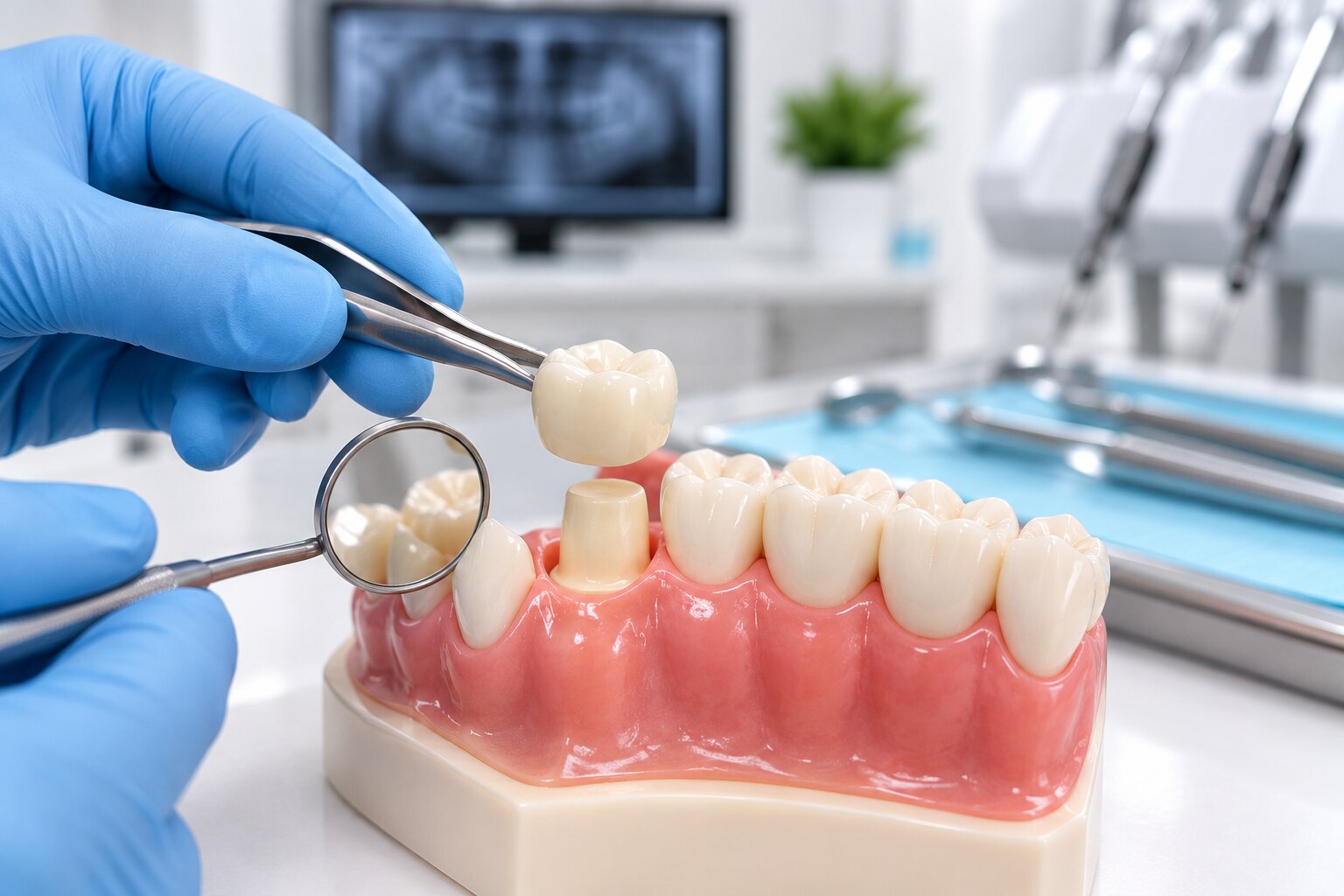
- Preparation: The dentist removes enough enamel and dentine to create space, then takes an impression or digital scan. This step is irreversible, so ask whether a filling, onlay or partial-coverage restoration could preserve more tooth.
- Temporary crown: A temporary crown protects the prepared tooth while the dental laboratory fabricates the permanent one. Avoid sticky foods and report looseness, sharp edges or worsening pain.
- Fitting: The dentist checks contact with neighbouring teeth, bite, shade and margin fit before cementing the crown.
- Review: Arrange a follow-up to assess comfort, cleaning at the margin and chewing. At Atlas Dental Clinic, ask whether scanning, fitting and review can be scheduled to reduce travel between visits.
Give the dentist a complete medicine list, including anticoagulants, osteoporosis medicines, diabetes treatment and allergies. Do not stop a prescribed drug yourself. Mention dry mouth, cognitive impairment and swallowing difficulty so prevention and instructions can be adjusted.
If walking, vision or hand control is limited, bring a caregiver. Confirm wheelchair access, parking, appointment duration and transport home; reliable brushing and between-teeth cleaning matter as much as the crown’s fit.
Related service
Dental Crowns & Bridges At Atlas Dental Clinic, Kammanahalli, Bangalore, we provide advanced dental crowns and bridges to restore the strength, function, and appearance of... View service → |
How should an older adult maintain a crown after fitting?
Brush the crown and its margin twice daily, and clean between the crowned tooth and its neighbours every day. A crown reinforces a weak tooth and reduces the chance of cusp fracture, but it cannot prevent decay at the crown edge, root caries, gum disease or a root fracture.
Among the dental crown benefits older adults in bengaluru value, restored chewing is important, but maintenance determines how long that benefit lasts.
Material and bite change the maintenance burden:
| Factor | Maintenance implication | What to watch for |
|---|---|---|
| Ceramic or porcelain | Resists staining but can chip under heavy clenching | A rough edge, visible chip or new sensitivity |
| Zirconia or metal | Resists fracture well, yet the margin can still decay | Food trapping or a darkening, tender margin |
| Strong bite or grinding | Increases wear, loosening and fracture risk | Morning jaw soreness, cracked material or repeated debonding |
Dry mouth raises caries risk and makes chewing and swallowing harder. Ask for a medication review, saliva-management advice and fluoride prevention suited to your risk; sip water, and use sugar-free gum only if swallowing safely. Clean exposed roots gently because root caries can develop beside an otherwise intact crown.
Arrange a dental review for:
- Persistent pain when biting or a bite that feels high
- Loosening, swelling, bad taste or pus
- Sensitivity that does not settle
- A cracked, chipped or sharp crown
These signs can indicate recurrent decay, cement failure, nerve disease or a crack, not normal ageing.
Frequently asked questions
What determines whether an older adult can have a crown?
A dentist checks whether the tooth is restorable, has enough remaining structure and bone support, and can be kept clean. Health conditions, medicines, dry mouth, gum disease and ability to attend appointments also affect planning.
When is a crown better than a filling, onlay or tooth replacement?
A crown is useful when a tooth has extensive decay, large fillings, cracks or weakened walls but still has a sound root and can be restored. A filling suits smaller defects, an onlay preserves more tooth when damage is limited to part of the biting surface, and tooth replacement is considered when the tooth cannot be predictably saved.
Does a crown require a root canal?
No. A crown can cover a living tooth when the pulp is healthy. Root canal treatment is needed when the pulp is infected, irreversibly inflamed or exposed, followed by a crown when the remaining tooth needs protection.
How does an implant crown differ from a tooth crown?
A tooth crown fits over a prepared natural tooth. An implant crown attaches to an implant after the tooth has been removed and the implant has integrated with the jawbone. Implant treatment involves surgery, healing time and sufficient bone and gum health.
What should seniors plan for during crown treatment in Bengaluru?
Ask about the number of visits, temporary crown care, local anaesthesia, transport after treatment, medicine interactions and what to do if the temporary crown loosens. Arrange help if mobility, memory or vision makes home care difficult.
Keywords